


Doula
End-of-Life Doula
Hello, I'm Ariane, an End-of-Life Doula. Think of me as a compassionate guide and a bridge during a profound time. I help connect the practicalities of the medical and legal worlds with the deeply personal needs of the emotional, practical, and existential needs of individuals and families. My role is to help individuals and families better understand their options, strengthen their capacity to make informed decisions, and ensure that their wishes are understood and respected
Trained at Douglas College in British Columbia and the International End of Life Doula Association in California, my foundation is built on care and expertise. My approach is rooted in empowerment, not only for the person on the journey but for the loved ones walking beside them.
An end-of-life doula does not replace physicians, nurses, social workers, or legal professionals. Instead, a doula complements existing care by providing emotional support, practical guidance, education, and continuity throughout the end-of-life journey.


Conferences and Workshops
-
Interactive facilitation to open an inclusive dialogue about end of life, death, and grief.
-
Rigorous content, grounded in research and adapted to the realities of Quebec.
-
Safe spaces that foster reflection and dialogue.

Planning
-
Clarification of end-of-life wishes and support in personal reflection.
-
Assistance in initiating essential conversations with loved ones and health care professionals.
-
Explanation of existing tools (protection mandate, advance medical directives, levels of care), without providing legal or medical advice.

Care Navigation
-
Assistance in understanding the health care system and available resources.
-
Support in preparing for medical appointments and structuring important questions.
-
Facilitation of communication between the person, their loved ones, and care teams.

Palliative Care
-
Presence with the ill person and their loved ones.
-
Emotional support to navigate illness with greater serenity and clarity.
-
Complementary support to the medical team, centered on listening.
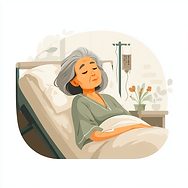
End-of-Life
-
Continuous or occasional presence as the end approaches.
-
Creation of meaningful moments, rituals, or spaces for transmission.
-
Support in complex decisions, including medical assistance in dying.

After Death
-
Presence with loved ones in the hours and days following death.
-
Support with initial steps and acts of remembrance.
-
Guidance to begin the grieving process and professional referral as needed.
Book an online meeting!


1 hr
100 dollars canadiens
1 hr 30 min
130 dollars canadiens
Case Study
Helping a Family Navigate Complex End-of-Life Decisions
Client
A family supporting a loved one who had lost decision-making capacity at the end of life (anonymized real case)
The Challenge
Following a hospitalization, a family was suddenly faced with making important healthcare decisions for a loved one who had become incapable of expressing their wishes. For years, the person had repeatedly told family members that they had "requested Medical Assistance in Dying through their notary." As the situation unfolded, it became apparent that they had most likely completed an Advance Medical Directive, not a request for Medical Assistance in Dying. This misunderstanding, combined with limited knowledge of the healthcare system and goals of care, left the family feeling overwhelmed and uncertain about how to honour their loved one's wishes.
Our Role
Fil d'Ailes helped the family build the knowledge, confidence, and capacity needed to actively participate in healthcare decision-making.
Our support:
-
clarifying the different advance care planning tools (Advance Medical Directives, goals of care, protection mandates, Medical Assistance in Dying, etc.);
-
exploring the person's values, wishes, and previously expressed preferences;
-
preparing the family for conversations with healthcare professionals;
-
providing ongoing decision support as the person's condition evolved.
Qulysis Approach
.png)
Understand
Explore the person's life story, values, previously expressed wishes, and the family's understanding of the situation to distinguish documented decisions from assumptions or misunderstandings.
.png)
Mobilize
Support open communication within the family and foster constructive dialogue with
healthcare professionals.

Design
Develop a personalized decision-support plan by identifying priorities, available
resources, and key questions for upcoming decisions.

Implement
Develop a personalized decision-support plan by identifying priorities, available
resources, and key questions for upcoming decisions.

Evaluate
Continuously reassess the family's evolving needs for information, emotional support, and decision guidance as the situation changed.

Sustain
Equip the family with the knowledge and confidence to continue navigating the
healthcare system while providing ongoing support through the end of life.

Impact
By clarifying the person's advance care planning documents and strengthening the family's understanding of goals of care and treatment options, the family was able to participate confidently in discussions with the healthcare team and make decisions that were more closely aligned with their loved one's values and previously expressed wishes.